
AI artwork of Alan Turing sells for $1m
Here’s what you need to know:
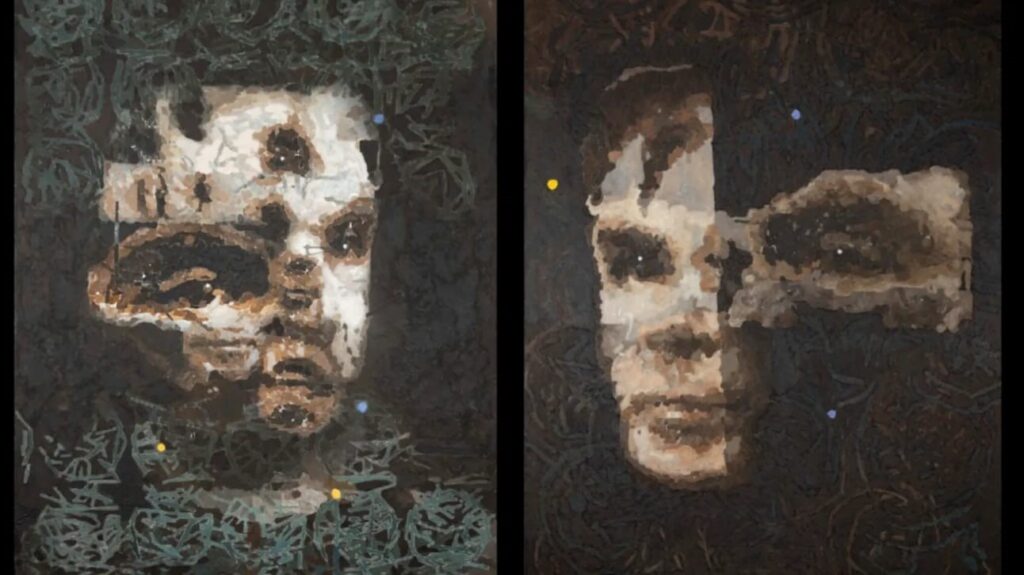
An AI-generated portrait of Alan Turing, created by the humanoid robot artist Ai-Da, has sold for a staggering $1,084,800 (£836,667) at auction. The artwork, titled “A.I. God,” drew 27 bids and far exceeded Sotheby’s original estimate of $120,000 to $180,000.
Turing, celebrated as the father of modern computing and artificial intelligence, is portrayed in a distorted, haunting style in Ai-Da’s work, inviting reflection on the ethics and power of AI. This milestone sale, described by Sotheby’s as “launching a new frontier in the global art market,” represents the first time an artwork by a humanoid robot has been sold at auction.
• Historical Significance: Alan Turing’s contributions to cryptography and computing are monumental. His wartime work at Bletchley Park, cracking Nazi codes, and his vision of a digital computer laid the foundation for modern AI. The sale of his AI-generated portrait highlights how his legacy intersects with today’s technological advances.
• Groundbreaking Technology: Ai-Da Robot, the artist behind the piece, is equipped with advanced AI capabilities and robotic arms that allow it to create art autonomously. It completed 15 original paintings of Turing, each taking up to eight hours.
• Art as a Catalyst: The director of Ai-Da Robot Studios, Aidan Meller, noted the artwork’s ability to spark conversation on AI’s growing role in society. According to Ai-Da, “A.I. God” encourages viewers to consider the ethical and societal implications of advanced technologies — a theme Turing himself speculated about.
• Cultural Milestone: The sale price cements this moment as a major event in contemporary art, underscoring the growing overlap between AI innovation and traditional art markets.
• Ai-Da’s Mission: Having participated in global AI discussions, including the United Nations’ AI for Good Summit, Ai-Da’s creators emphasize its role in questioning AI’s impact and agency.
In Meller’s words, “A.I. God” not only explores Turing’s influence but raises complex questions about the future of AI and its role in shaping society.